
In December 2020, Washington Housing Conservancy (WHC) took a bold step to realize a simple but powerful promise: that people of varying income levels should be able to have housing that is affordable and to live together, side by side, in a community with ample opportunity.
When I came to WHC, I was excited about our mission to address the housing affordability gap for working families and individuals and to view housing as more than shelter but as a foundation for economic mobility. WHC is fulfilling its promise of creating dynamic mixed incomed communities across the DC region.
With the support of Amazon’s Housing Fund, we acquired a luxury apartment complex in the National Landing neighborhood, a part of Arlington undergoing intense redevelopment. Together with Amazon, we set out to prove that affordability and quality along with intentional efforts to connect residents with each other could not only enrich neighborhoods but open up opportunities. The acquisition of the 16-acre Crystal House site that includes the two-building, 825-unit Crystal House apartment complex, became the foundation for one of the region’s most ambitious efforts to create a truly mixed-income community.
Breaking New Ground
The Crystal House acquisition represented several firsts:
- Our first acquisition, setting the stage for WHC’s model of preserving affordability at moderate to low-income levels, strengthening community connection and promoting economic mobility.
- One of Amazon’s earliest investments through its Housing Fund, marking one of its most catalytic commitments to housing affordability. Amazon’s investment provided WHC with the capital to secure the property and lock in 99 years of long-term affordability—a nearly unheard-of commitment in one of the nation’s most competitive housing markets.
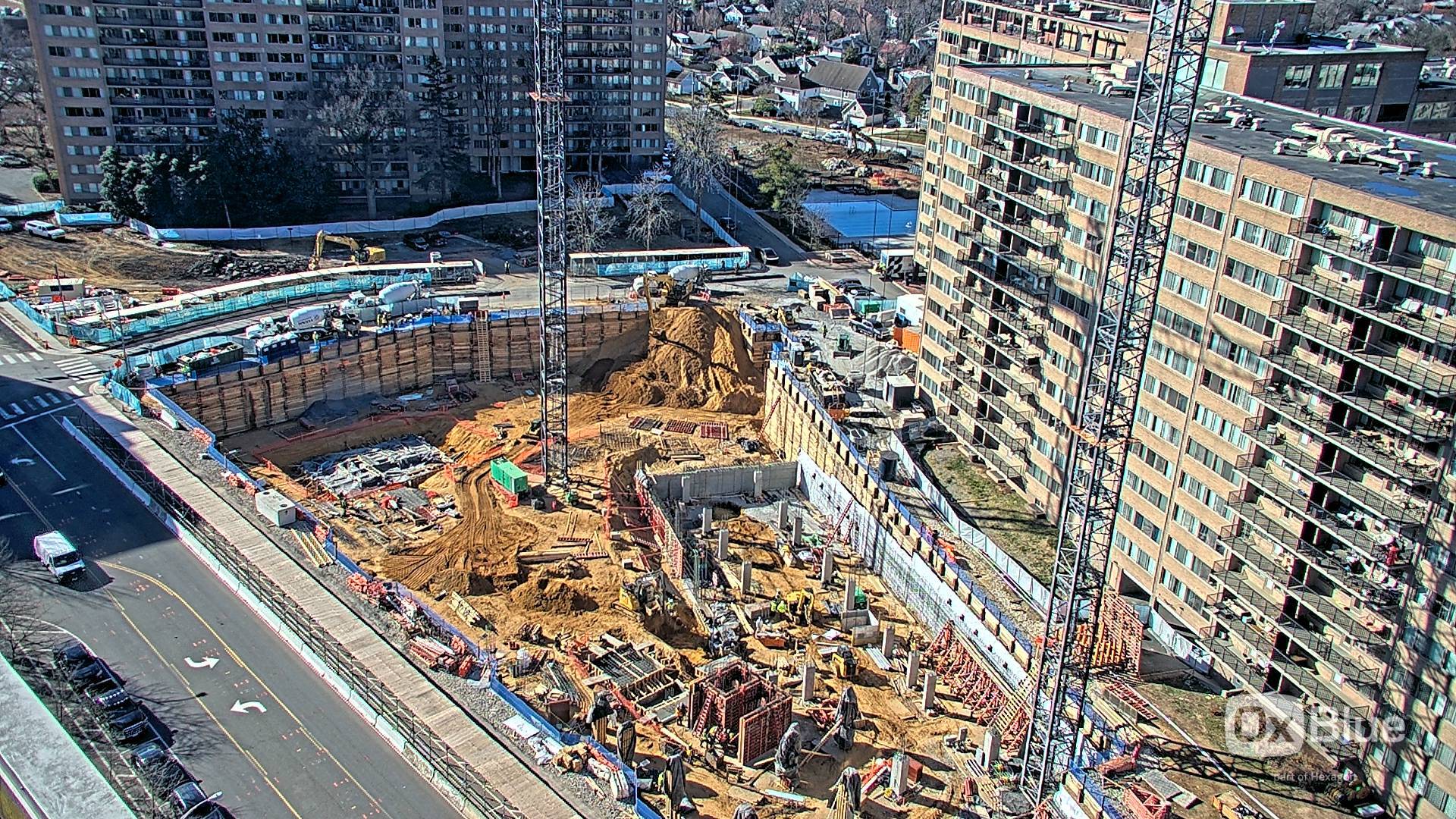
- One of the largest affordable housing investments in Arlington County. Currently, an additional 717 units of affordable housing are being developed at the Crystal House site; soon to bring a total of over 1,500 units.
- The forging of a collaborative partnership to develop additional vacant parcels on the Crystal House site among WHC, Amazon, Arlington County, True Ground Housing Partners, and EYA—showing what’s possible when private, public, and nonprofit sectors work together for public good.
Last year, WHC reached an important milestone: 75% or 619 of the 825 apartments are affordable and/or workforce, serving moderate to low-income people. This gradual transition, achieved through natural turnover and careful rent stabilization, demonstrates that affordability can grow without displacement. WHC is meeting our mission of creating affordability for teachers, first responders, hospitality workers, and other service workers who keep our region running.
The Multiplier Effect of Amazon’s Investment: Expanding Housing Opportunity Across the Site
Amazon’s Housing Fund investment in Crystal House represented an innovative leap in the housing arena—one that made possible what otherwise would have been impossible. The investment not only launched our first acquisition and social impact efforts but opened the door to even greater impact.
The Crystal House site includes six additional vacant parcels surrounding our two apartment buildings. WHC transferred the vacant parcels to Arlington County for redevelopment, paving the way for the creation of even more affordable housing on the site. Arlington County, after an open and competitive request for proposal (RFP) process, selected the nonprofit True Ground Housing Partners and developer EYA to develop these six parcels.
In September 2025, True Ground broke ground on The Sweeney, a 432-unit affordable apartment community located on the former Crystal House 3 site. When complete, The Sweeney and future developments on the remaining sites will add a mix of:
- 80 affordable senior apartments
- 89 affordable family apartments (1-, 2-, 3-, and 4-bedroom homes)
- 222 market-rate units
- 42 for-sale market-rate homes
Together, these projects will create an array of housing options—affordable, workforce, market-rate rental, and homeownership—on one site; something rarely achieved in high-cost urban markets.
Building Belonging and Social Capital
At WHC, we believe housing is more than a roof—it’s the foundation for connection and upward mobility. Research by economist Raj Chetty and others shows that friendships and relationships across racial and social-economic lines are key to unlocking economic opportunity. That belief is woven into WHC’s social impact strategy, and we are demonstrating what is possible at Crystal House.
From day one, we partnered with the National Initiative on Mixed-Income Communities to help residents build meaningful connections. Through initiatives like our resident stewards & resident-led groups, Humans of Crystal House, and partnerships with the credit building company, Esusu, WHC helps residents strengthen both community bonds and financial resilience.
By the Numbers:
- 825 homes preserved, with nearly three-quarters affordable or workforce-level.
- 150+ community events—from cultural festivals and small business markets to “sip and paint” nights, pool parties, and “doggie dips.”
- Improved credit outcomes through Esusu’s rent-reporting partnership, helping residents build credit and financial security.
- Resident-led groups that plan events, mentor neighbors, and shape the culture of the community.
Charles, a longtime Crystal House resident and Resident Steward, said it best:
“The positive of living in a community like WHC’s Crystal House is that you are encouraged to build community in the space that you are in. There’s an epidemic of loneliness… Neighborhoods aren’t really the same anymore. And creating a kind of a neighborhood feel I think is very valuable in an apartment complex.”
Though Charles and his wife have since moved to Maryland, they remain close to friends they made at Crystal House—a reflection of the deep connections built there.
A Model for What’s Possible
Crystal House has become a blueprint for preserving affordability in high-opportunity neighborhoods—places with an abundance of jobs, proximity to transit, healthcare, schools, and amenities.
Most mixed-income housing is typically achieved through new construction or federal programs like HUD’s Choice Neighborhoods initiative, and these communities are often under-resourced. Crystal House flipped that script, proving that private capital, mission-driven leadership, and long-term affordability covenants can preserve affordability where it’s needed most.
Together with our partners, WHC has demonstrated that affordable housing can thrive in competitive markets—and that the private sector can be a powerful ally in solving the housing crisis.
Looking Ahead
As we celebrate this milestone, we’re focused on building our momentum at Crystal House and beyond. We also want to acknowledge that living through the construction of the additional affordable housing units coming on-line will be disruptive for our Crystal House residents, and we are sensitive to resident concerns and inconveniences. We are working with the developers and Arlington County to help mitigate any negative impacts.
In the years ahead, WHC will:
- Strengthen community ties as new development transforms the Crystal House site—ensuring existing residents’ needs are met and new amenities foster inclusion.
- Expand economic mobility opportunities that help residents grow their financial stability and career prospects.
- Deepen resident engagement, keeping community voices at the heart of decision-making.
- Create shared amenities that bring long-term and new residents together.

Preserving housing affordability and promoting economic mobility in the DC-region
The Washington Housing Conservancy is a 501(c)(3) non-profit organization. Your investment helps us expand our work. Your gift is 100% tax-deductible. EIN 83-1866109

Privacy Policy
Terms & Conditions
Get in touch
Follow us


